
If you’re traveling to Medellín and don’t speak fluent Spanish, you can still get by — but a handful of practical Colombian phrases plus a few safety habits will make the difference between a stressful visit and a smooth one. This guide gives the exact survival Spanish to use in taxis, restaurants, shops and emergencies, and pairs each phrase with real actions to keep you safer while you travel.
Why a few phrases matter more than fluency
Medellín is friendly and increasingly tourism-ready, but most everyday interactions happen in Spanish. Learning short, useful phrases does three things: it speeds transactions, lowers friction when plans change, and signals respect to locals (which in turn often improves treatment). You don’t need perfect grammar — you need phrases you can say clearly and confidently.
Essential survival Spanish for Medellín (say these first)
- Hola — hello. A friendly opener for any service interaction.
- ¿Me puede ayudar? — Can you help me? Use this at a store, police post, or from staff at a hotel.
- ¿Dónde está el baño? — Where is the bathroom? Very useful in restaurants and stations.
- ¿Cuánto cuesta? — How much does it cost? Say it with eye contact when buying tickets, food, or souvenirs.
- La cuenta, por favor — The bill, please. For restaurants and bars.
- ¿Puede traerme un Uber/taxi? — Can you call me an Uber/taxi? Most hotels and bars will help if you ask like this.
- ¿Dónde está el hospital/la policía? — Where is the hospital/police? Say this in emergencies or to get directions quickly.
- 123 — Colombia’s national emergency number: call for police, ambulance or fire. (Keep it handy in your phone.)
Taxi and ride phrases
- ¿Cuánto me cobra hasta [sitio]? — How much will you charge me to [place]? Use this if you’re arranging a private price up front.
- Voy para [nombre del lugar]. — I’m going to [place]. Say this clearly when giving an address.
- Por favor, ¿puede esperar aquí? — Please can you wait here? Useful when you step out for a moment.
How to use phrases safely — concrete habits
Language helps, but good habits reduce risk faster. Pair each phrase with a safety habit:
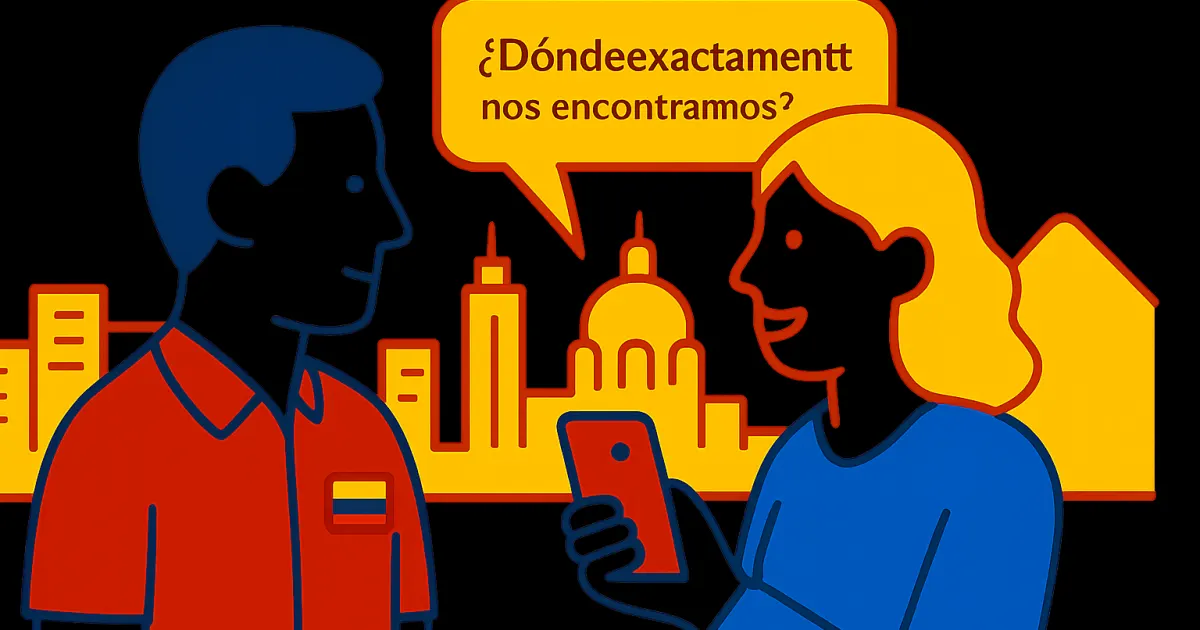
- Before you accept a ride: Ask the driver the car plate and name, then confirm they match the app or the hotel’s information. Before accepting rides or meeting someone from an app, check the community reports on the OjoCita scam database to see if others have flagged that person or location — then use the Spanish phrase ¿Dónde exactamente nos encontramos? to confirm a safe, public meeting spot.
- When hailing a street taxi: Use main taxi stands or request an app-based ride; say ¿Es taxi de sitio? to check it’s a licensed stand taxi. If anything feels off, say No, gracias and walk back to a public area.
- When paying: Ask ¿Acepta tarjeta? before handing over cards; keep a small cash wallet and a decoy wallet for tips or distractions.
- At night: stick to busy, well-lit routes and say ¿Está muy lejos caminando? (Is it far to walk?) to decide whether to walk or take a ride.
- If you’re unsure about a person you met online: tell someone where you’re going, share the person’s name and meeting place, and meet in a crowded public location. If you feel pressured, call 123 or go to the nearest hotel lobby.
Ordering food and drink — quick script
In a restaurant, try this five-step script: 1) Hola (smile); 2) ¿Tiene mesa para uno/dos? (Do you have a table for one/two?); 3) Me recomienda algo, por favor (What do you recommend?); 4) Quisiera [plato], por favor; 5) La cuenta, por favor when you’re ready to leave. Simple starters make the rest of the meal easy.
Handling payment and bargaining
For markets and small vendors use ¿Cuánto cuesta? first. If you need to negotiate, say ¿Me lo deja en [precio]? (Will you take [price]?). Don’t haggle hard in tourist areas — aim for a polite counteroffer. When paying, check the change and say ¿Me puede confirmar? if the vendor’s math seems off.
If something goes wrong: immediate phrases and actions
- Necesito ayuda — I need help. Say this loudly to attract attention in a public place.
- Me robaron — I’ve been robbed. Find the nearest hotel, police post or call 123 immediately.
- Estoy perdido — I’m lost. Show the name of your hotel on your phone while you say it — locals respond quickly to a visual.
For official travel safety information, check the U.S. Department of State’s Colombia travel advisory before you go — it lists current risks and local contact details that can affect how you plan your trip.
(External source: U.S. Department of State — Colombia travel advisory.)
Practical rehearsal and tools
Practice the phrases aloud before you travel. Use a phrasebook app or a short audio loop to get comfortable with pronunciation. Keep translations on your phone (offline if possible) and screenshot key phrases so you can show them to drivers, shopkeepers, or police if your spoken Spanish isn’t understood.
If you want a fuller sense of how Spanish sounds in real Medellín situations, our companion article on how much Spanish you actually need to visit or move to Medellín walks through neighborhood examples and common scenarios to help you decide how much practice to do before you land.
How Much Spanish Do You Actually Need to Visit or Move to Medellín?
Final checklist before you go
- Save local emergency numbers and your embassy/consulate contact.
- Screenshot or memorize 6–10 survival phrases from this article.
- Install the ride apps you’ll use and confirm pickup rules for your hotel.
- Find and check community scam reports on the OjoCita scam database before meeting new people or accepting unofficial rides — and use ¿Dónde exactamente nos encontramos? to lock in a public meeting point.
- Plan a safe arrival: prefer daytime airport transfers and verified drivers.
With a few clear phrases and the safety habits above, you’ll be able to navigate Medellín more confidently. The goal is not to be fluent on day one, but to be understood, to de-escalate uncertainty, and to keep yourself safe while you enjoy the city.
Frequently Asked Questions
Can I visit Medellín without speaking any Spanish?
Yes — but staying in tourist areas and using apps will make it easier. Learning 6–10 survival phrases (greetings, asking for help, directions, and 'La cuenta, por favor') will speed transactions and reduce misunderstandings.
What are the most important phrases to use with taxi drivers?
Use: 'Voy para [lugar]' (I’m going to [place]), '¿Cuánto me cobra hasta [sitio]?' (How much will you charge to [place]?) and '¿Puede esperarme aquí?' (Can you wait here?). Confirm plate and driver name before entering.
How do I ask for help or report an emergency?
Say 'Necesito ayuda' (I need help) or 'Me robaron' (I’ve been robbed) and call Colombia’s emergency number 123. Go to the nearest hotel lobby or police post if you can get there safely.
Should I check local scam reports before meeting someone from an app?
Yes. Check community reports (for example, the OjoCita scam database) before accepting rides or meeting people, then confirm your meeting with '¿Dónde exactamente nos encontramos?' and choose a public spot.
Is it safe to use cash or card in Medellín?
Both are used widely. Ask '¿Acepta tarjeta?' before paying and keep a small cash wallet for street purchases. Keep cards and large sums of cash out of sight in public.
What should I do if I get lost?
Show your hotel name or address on your phone, say 'Estoy perdido' (I’m lost), and ask someone nearby '¿Dónde está [lugar]?' If you feel unsafe, enter a shop or hotel lobby and ask staff for help.
How can I practice these phrases quickly before my trip?
Use short audio loops or phrasebook apps and practice aloud in 5–10 minute sessions. Screenshot key phrases for offline use and rehearse the taxi and restaurant scripts until they feel natural.