
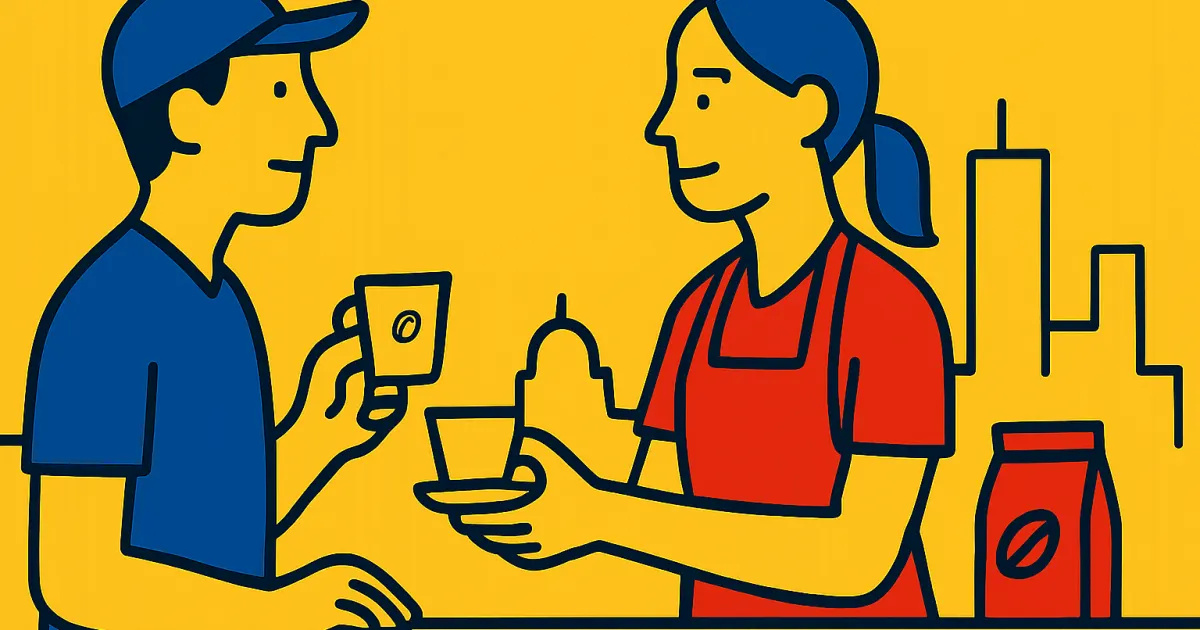
Order coffee like a local: the quick answer
If you want one clear takeaway: learn a handful of short phrases—tinto, perico, un café con leche, por favor, and ¿me lo puede poner para llevar?—and you’ll be able to order coffee confidently almost anywhere in Colombia. This guide teaches the exact phrases, offers simple pronunciation cues, polite variations, and short cultural notes so you don’t sound robotic or accidentally ask for the wrong drink.
Why Colombian coffee words differ (and one reliable local adjective)
Across Colombia you’ll hear local names for common drinks—tinto (small black coffee), perico (coffee with milk, similar to a café con leche but often lighter), and a café (sometimes used for milkier options). Knowing these local names prevents confusion, especially in neighborhood cafes and street kiosks where menu language is simple. For broader context on Colombia’s coffee tradition and terminology, the National Federation of Coffee Growers of Colombia is a useful reference on how central coffee is to national culture and quality standards. (federaciondecafeteros.org)
Core phrases to memorize (with simple pronunciation tips)
- Un tinto, por favor. — (Oon TEEN-toh, por fah-VOR.) A tinto is usually a small black coffee; it’s the quick, local way to ask for black coffee.
- Un perico, por favor. — (Oon peh-REE-koh.) A perico is a coffee with a splash of milk — light and common for breakfast.
- Un café con leche, por favor. — (Oon kah-FEH kon LEH-cheh.) This is the clearer, more formal “coffee with milk.”
- ¿Para llevar? — (PAH-rah yeh-BAR?) “To take away?” Add por favor or combine: ¿Me lo puede poner para llevar, por favor?
- ¿Cuánto cuesta? — (KWAHN-toh KWEHS-tah?) “How much does it cost?” Useful at stalls and markets.
- Sin azúcar / con azúcar — (seen AH-thoo-KAHR / kon AH-thoo-KAHR) — "without sugar" / "with sugar". Note: Colombians often sweeten coffee before serving; asking sin azúcar is common if you prefer unsweetened.
- Un poco más suave / más fuerte — (oon POH-koh mahs SWAH-veh / mahs FWER-teh) — "a bit milder / stronger" when customizing strength.
Short polite extras
- Por favor — always helps, and people notice politeness.
- Gracias — say it and smile when you’re handed a drink.
- Con leche de almendras / soja — (kon LEH-cheh de al-MEN-dras / SO-yah) for plant milks; not every place has them, so be prepared to ask and then accept “no” politely.
How to order step-by-step (a mini script)
- Greet: Buenos días / Buenas tardes (Buenos días in the morning, buenas tardes after noon).
- Order: Un tinto, por favor (or choose perico / café con leche).
- Specify carryout: ¿Me lo puede poner para llevar? if you want it to go.
- Pay and say thanks: Gracias.
Common ordering scenarios and short scripts
Café chain / specialty shop
Staff often speak some English in major chains, but use the local phrasing and you’ll connect faster. Example: Hola, un tinto mediano para aquí, por favor. (Hello, a medium tinto to drink here, please.) Chains may use size words like pequeño/mediano/grande.
Neighborhood kiosk or panadería (bakery)
These places are fast and local. A two-word order is common: Un perico or Un tinto. Expect a small cup, often strong and sweetened unless you ask otherwise.
At a specialty roaster or coffee bar
Here you can use slightly more vocabulary: ask about origin or roast by saying ¿De dónde es este café? (Where is this coffee from?) or ¿Es de tueste claro o oscuro? (Is it light or dark roast?). These deeper questions are welcomed by baristas and often lead to friendly conversation.
Pronunciation tips that actually work
Keep phrases short and clear. Emphasize the stressed syllable shown in the parenthetical guides above (TEEN-toh, perico). Colombians generally speak a clear, rhythmic Spanish—aim for a friendly tone rather than perfect accent. Gestures (pointing to the menu, holding up one finger for "uno") are perfectly acceptable when your pronunciation isn’t perfect.
Colombian coffee culture — short notes for respectful tourists
Coffee is part of everyday life and regional identity. Asking brief questions about the coffee’s origin or thanking a barista with a smile goes a long way. If you want a reliable overview of Colombia’s national coffee institutions and how coffee is promoted abroad, the National Federation of Coffee Growers of Colombia provides background on the industry’s role and standards. (federaciondecafeteros.org)
If you want to bring a taste of Colombia home or use real examples to practice your new phrases with friends, try Piracii's farm-direct Colombian coffee — the package labels and regional names make great vocabulary flashcards and conversation starters with local baristas.
Practical mistakes to avoid
- Don’t assume “café” always means black coffee—ask if the menu is unclear.
- Avoid overly long customizations at tiny kiosks (they may not have alternative milks or syrups).
- Don’t insist on American-size portions at neighborhood spots—enjoy the local style.
Useful follow-up—practice resources and internal reading
Practice your survival phrases with short audio loops or by repeating the mini-scripts aloud before your trip. For more survival phrases tailored to Medellín and practical tips for English speakers, see our posts on Survival Spanish for Medellín: Key Phrases to Learn Before You Go and How Much Spanish Do You Actually Need to Visit Medellín? A Practical Guide for English Speakers.
Quick troubleshooting: If the barista doesn’t understand
Use gestures and menu pointing. Try the English word “coffee” if needed, but then repeat the local name once—people appreciate the effort. If you need to clarify sugars or milk, say: Sin azúcar, por favor or Con leche normal.
Wrapping up
Ordering coffee in Colombia is one of the easiest and most rewarding language interactions you’ll have. Memorize the short list of local terms (tinto, perico, café con leche), keep your requests polite and brief, and use the mini-scripts above. With those tools you’ll enjoy better service, friendlier exchanges, and more authentic coffee moments.
External resources and a quick practice video
For a short beginner-friendly practice video that demonstrates typical coffee orders and simple phrases you can repeat aloud, see this practical lesson on ordering coffee in Colombia. (youtube.com)
Frequently Asked Questions
What is a tinto in Colombia?
A tinto is the local name for a small strong black coffee commonly served at street kiosks and neighborhood cafés across Colombia.
How do I ask for my coffee to go?
Say “¿Me lo puede poner para llevar, por favor?” or simply add “para llevar” after your order.
Will I be understood if I say 'coffee' in English?
Many staff in tourist areas know basic English, but using local words like tinto or perico and a polite tone usually gets faster, friendlier service.
How do I ask for less sugar or no sugar?
Say 'sin azúcar, por favor' for no sugar or 'poquito de azúcar' for a little sugar; many Colombian coffees are sweetened by default at casual spots.
Can I ask about the coffee origin in a specialty shop?
Yes. Ask '¿De dónde es este café?' or '¿Qué región es este grano?'—baristas at specialty shops usually welcome questions about origin and roast.